









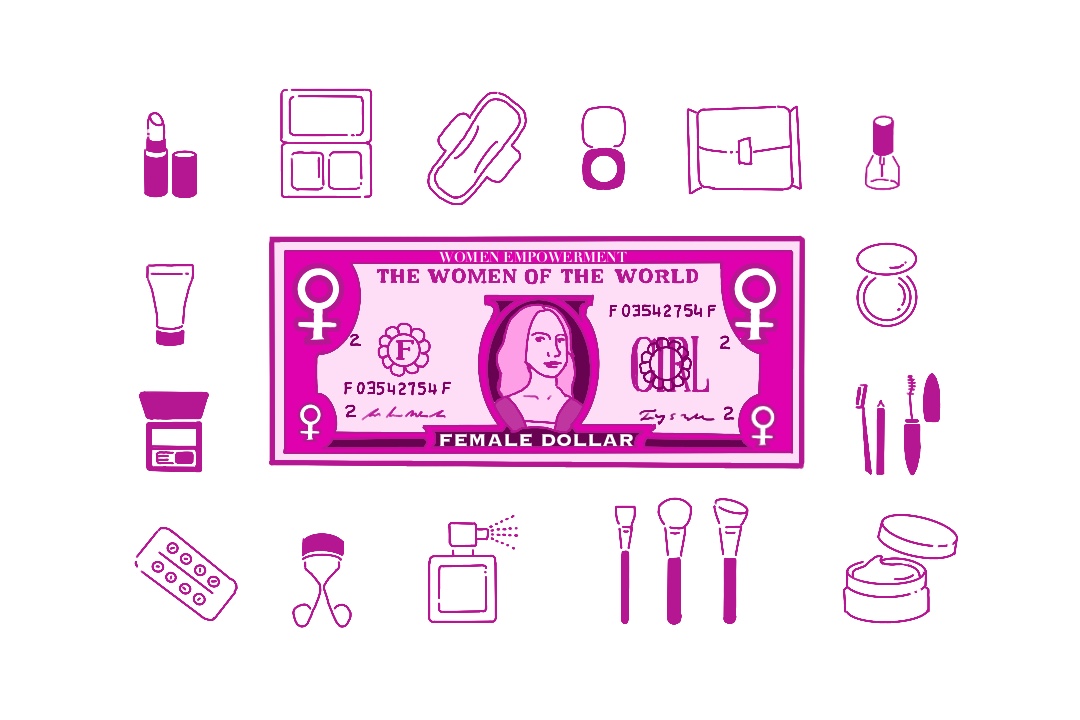














What is pink tax and what’s the effect of it? Around the US, especially in retail stores where gender targeted products are sold, companies market products to women and often charge more for them even if the same product is just a different color.
The pink tax didn’t just start now; it’s been many generations of women. In the past the pink tax was more exaggerated and tied to gender roles, but now it hides in the market’s subtle price changes. In older times, women were often expected to look a certain way by wearing a certain perfume, a certain makeup look, or get the newest hairstyle. All these things were priced very high, something like a trim of the hair could be 60$ for a female but 20$ for a man. Women also generally earned less so paying for these simple things was increasingly difficult. Today, things like women’s shampoo, razors, deodorant, lotions, and reproductive health care (birth control and maternity care) products are priced higher than men’s because it’s labeled for women.
“It’s often overlooked because of how hidden the price changes are,” says Violet’s Mom. “It’s so common to now go to a public bathroom and the tampons cost 25 cents and more. What if someone doesn’t have that money, even if it is a small amount of money. Are we supposed to just bleed out and ruin our pants or underwear? Even though these price changes might seem small it can affect how we pay our bills and manage our finances. It’s not fair since we contribute so much to society.
As conversations about pink tax continue it’s also important to consider how it could have affected older generations’ view of this issue and how it could compare as of today we can better understand how it’s been a problem or if it has overtime. “Ill be honest, back in the day we didn’t really talk about things like this. Never paid attention to prices being different for women and men but that doesn’t mean it wasn’t happening, it just wasn’t something people questioned”. “I don’t see a good reason why the same product should cost the most because it’s made for women. That doesn’t seem right to me, no matter what generation you’re from”
Too many young people are also part of the huge group getting affected by the Pink Tax. Most young girls get their periods around the age of 11 or older which affects them and their families by requiring them to pay for hygiene products like pads, tampons, menstrual cups, or cloth pads depending on their use of liking. All these hygiene products are getting more expensive by the day, making it difficult for young teenage girls who get paid the minimum wage, or people who don’t have a job to pay for necessary products they need for something they have no control of. There are so many products that are marketed to women that cost more, that are the same if not similar products that are marketed towards men, that end up costing less. Even with kids, clothes marketed for girls are also more expensive than the boys’ version, when both of their clothes are the same quality and design. Personal care products like shampoo, body wash, deodorant, razors, and many more products are more expensive for women. Why? Because the package differs to have more of a “pink” or feminine design for women. The concern and frustration over the pink tax are because over time the small difference prices end up adding up meaning that women will end up paying hundreds if not thousands of dollars more over their lifetime for things they have no control of.
“I think it’s unreasonable for companies to charge more for gender-specific products when they’re essentially the same items. It doesn’t affect me as much personally because I’m a guy, but I see how it impacts the women in my life, especially my sisters and my mom. They end up spending more money on products that are shared across genders, just because they’re marketed with a more feminine design. That doesn’t really make sense, and it feels like companies are just doing it to increase profits. From what I’ve seen, a lot of these products are basic necessities and companies know people will keep buying them regardless of the price. That’s what makes it more frustrating, women are often paying extra for things they genuinely need. I think prices should be equal regardless of gender, especially when the product itself isn’t actually different. At the very least schools and communities could help by providing free hygiene products so that young people have access to what they need without worrying about the cost.” He explained,
Overall how it’s affected us generations after generations has been this way with no justification. In all, the pink tax has affected women, always creating unfair financial pressure. With no real reason for all these price differences it’s clear this issue deserves more attention, awareness and charge as of now or else we will all be incapable of living.