





















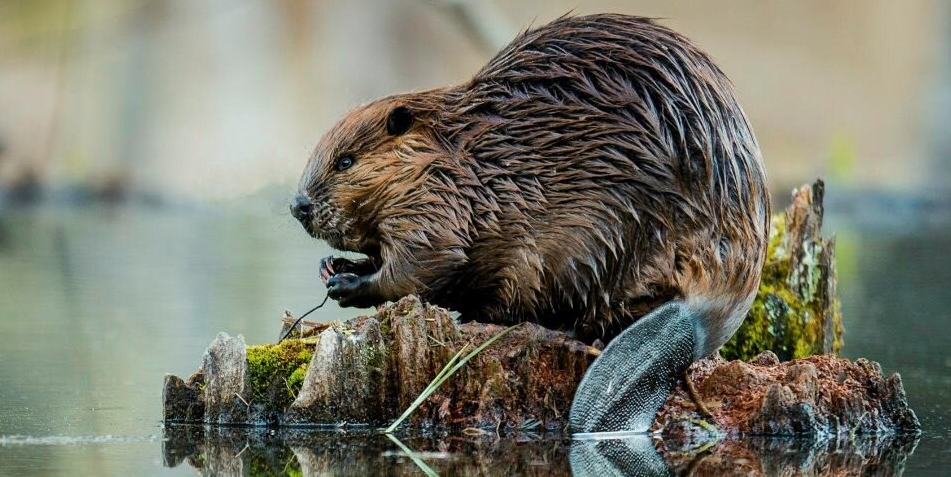



The Beaver Basics
A beaver is a semi aquatic rodent, which lives here in the north hemisphere, with large iron coated incisors (front teeth) made to munch through trees. But they’re more than just dam builders and ecosystem engineers, creating a new biome that plants and animals thrive in. Beavers were arguably the most prominent ecological engineers in pre-colonial North America, with an estimated population of 60 to 400 million individuals inhabiting nearly every aquatic habitat from the Arctic to Mexico.
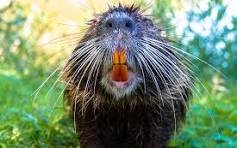 What kind of tools do these lumber jacks carry around, the main tool they use is what they’re most known for their big front teeth. They use their large iron coated incisors to munch through trees, their teeth get worn down from the wood, good thing their teeth never stop growing. They have 5 toes on each foot, and small dexterous front feet for handling materials and digging, their hind legs are larger and webbed for swimming, allowing them to swim 5 to 6 miles an hour. They have thick fatty tails that are used for swimming and balancing or alerting others to predators. They have valved nose and ears that close when underwater. Transparent eyelids used as goggles to see underwater. And water resistant fur thanks to their caster gland that produces oil, used in grooming to waterproof them. These are just some of the physical adaptations that allow these creatures to thrive.
Beavers aren’t lone wolves, they are social creatures in groups called colonies that are formed around a family with a main monogamous breeding pair that will mate for life, their new born kits (baby beavers), and their yearlings the previous generation. A colony typically consists of 5-8 beavers, but they can get up to around 12 beavers. The colony lives together, maintains the dam, builds cheches, and defends their territory from other competing colonies, It really does take a village to do everything these animal super heros do.
Beavers have been in North America for around 40 million years, their primal ancestors Castoroides were bear sized beavers that could grow to eight feet long from head to tail and weighing almost three hundred pounds in the largest specimens. The genus and species name of this animal translates to “beaver from Ohio”, As stated in Prehistoric beast of the week.
What’s the Big Dam Deal?
The North American beaver, not only are they cute but they’re master builders who really make a difference but also a valuable resource. With their buoyant bodies and their can do attitude, little can stand in their way. Beavers shape the lands across America, but how do they really do that?
Let’s talk about dams, but before we get into how, let’s talk about why these animal engineers do what they’re known for. With insider information from Alex Broz (wild for wild life inc), beavers are awkward on land, and vulnerable to predators so they build dams, to slow the flow of water and raise the water table because they are untouchable in the water, swimming as fast as Olympic swimmers. They don’t just live in these beaver made bodies of water, they dig these canals out into the woods to use them as water highways to reach new areas of trees and flow logs back to the dam, these canals reconnect rivers to their floodplains.
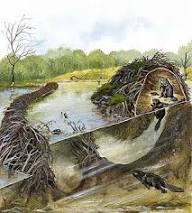 They build more than just dams, they actually don’t live in their dams but make separate lodges that they live in. These lodges are as large as 10-20 feet wide and 3-6 feet high; there are 2-3 feet of installation. These lodges have underwater entrances, with the water raised from the dams it gives the beavers seamless connection from their homes to their underwater domain ,and protection from predators. These secret entrances become critical in the winter, once the water freezes over and the access to trees are cut off they use underwater caches they are submerged food stock piles of branches anchored into the mud near the underwater entrance to their lodges so they can access them under the ice, these caches are stock piled through out the year to prepare for the winter.
Beavers, Betrayal, and Border Problems
Are there really beavers in Ohio? Ohio is home to over 30,000 beavers that populate the Ohio river valley. Who has ever seen a beaver? We surveyed the student body and staff of Thomas Worthington and only 8% of them have ever seen this keystone species in the wild. There are almost 5,000 beaver colonies in Ohio.
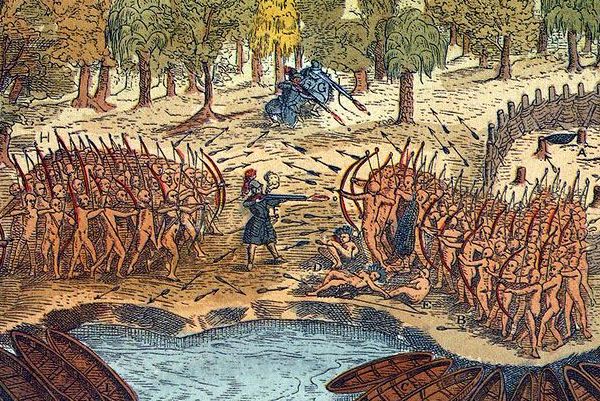 We live in the battle grounds of the Great Beaver Wars, during colonial era America The great beaver wars were a collection of battles over 200 years. To give some context for the reasons of war, information of the changing daily life, changing beliefs and trading. With the introduction of English customs when landing along the coast saw wampanag ( a purple decorative bead made of the shell of clams) being traded among the native tribes. The English colonial people started using them as currency, with the introduction of currency the coastal tribes produced the wampanoag the inland tribes begin to fall behind economically as trade with english with very common as it gave tribes access to steel tribes throughout the mid west traded furs as beaver was the hottest fashion trend in the old world. The/ demand for beaver pelts drove many to hunt them unsustably leading to the rapid decline in beaver population from 60-400 million in North America to 100,000 by 1900. With the population of beavers depleted, the native people begin to trade land for goods. This change in native peoples view on their lands is seen most clearly in the change of Anishinaabemowin (Ojibwe) language from aki as their land and themselves are one, to adaawaage as the change of land being a good that could be sold. This change in translation marks the erosion of culture.
When Beavers Fly
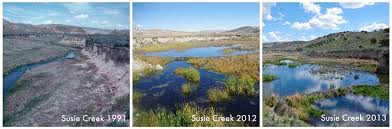 Why should you care about beavers? How do the effects of beavers really impact the environment?
Now we know what dams really are, let’s see the effects of them. When you look back on the landscape of north america the land has changed vastly from what it was before European contact, because beavers were the most prevalent, and , most numerous mammal in north america. Every waterway was populated with beavers, digging canals, slowing water, increasing biomass, and connecting rivers to flood plains. The ground was fertile and lush, the nutrients could easily make it into the soil in the flood plains and surrounding forest. These beaver waterlands host an array of plants and animals, comparable to rainforest or coral reefs. The dams filter out nitrates, creating cleaner water downstream by filtering out sediment, and also creating large deep pools of water that act as a carbon sink, and saturate the land acting as seed banks during wildfires. With the extremity and frequency of wildfires increasing.
What would happen if beavers disappeared? Without beavers nothing would slow the water, the rivers would become faster and narrow channels, increasing erosion and losing these river bank habitats. We see that when people use these water ways for transportation or commercialization. Historically rivers are used as early highways and cities are built right up to the banks of these rivers locking the river to its banks. They become simple straight streams preventing the river from meandering, creating oxbow lakes, and connecting floodplains back to the river. Leading to flooding in these disconnected floodplains. But flooding in your back yard isn’t the only reason you should care about the beavers,
Efforts to relocate and reintroduce beavers have been going since the 1920’s, but popularized by the 1940’s following WWII, when post-war migration into the west was driven by a combination of federal policy , shifting labor needs, and the pursuit of the “American Dream.” Which led to the development of rural areas, Idaho was popular for migration due to the bracero program bringing thousands of Mexican workers to Idaho to solve the labor shortages, 1948 displaced persons act brought thousands of people, and japanese american resettlement. Led to the post-war expansion into untouched parts of Idaho, that led to beaver human conflict. These conflicts were the foundation for The Parabeaver Project, the project headed by Elmo Heter after realizing transporting beavers in tradition land transport was not possible because navigation the rugged terrain was only possible horse back and strapping the beavers to horses and mules was not only stressful for the animals, but difficult for the handlers. Accessing the dense interior of Idaho was only possible from the sky. Elmo drawing inspiration from the WWII paratroopers he designed specialized wooden creates to open on touch down, secured by the surplus of WWII parachutes. A single beaver named “Geronimo” famously tested the design multiple times before the project began, he reportedly became so used to it that he would crawl back into his box on his own. The beavers that were relocated formed new colonies becoming well-established and creating lasting, fire-resistant, lush wetlands still visible today.