






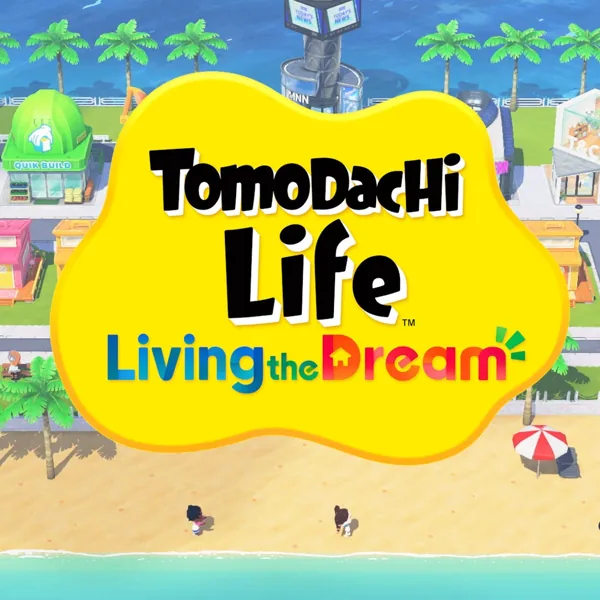

















After more than a decade of silence, Tomadachi Life: Living the Dream arrived to fans not with dramatic reinvention but with something stranger– confidence in its own weirdness. And everyone is in love.
Released on April 16th 2026 for the Nintendo Switch, the game continues the series previously on the 3DS, with the core idea: place digital people, Miis on an island, and then… you watch. Relationships form, arguments happen, friendships collapse and rebuild, and sometimes someone sings a song that feels like it came from a dream you barely remember. There isn’t really a goal… and that’s the point.
You can feed your Miis, dress them, introduce them to each other– but the real fun happens when you step back. The game’s design leans into unpredictability, letting interactions unfold on their own. It’s less of a simulation you manage and more of a system you witness.
And that’s where the love for this new addition comes from, for many. That’s where it either clicks… or doesn’t.
The new game expands what players can do, but not in the way you may expect, instead of turning into a complex life simulator, it widens the sandbox. You can create detailed Miis, shape their personalities, and watch them build relationships that go beyond what previous games have allowed. For the first time, the series has included same sex relationships, non-bianary identities and broader romantic options– something fans have been asking for since the game’s original release. It’s a quiet but significant shift, the game doesn’t make a big deal of it– it just lets it exist.
What keeps Tomadachi life alive isn’t progression– its moments. A random love confession that crashes and burns, two characters arguing over something completely meaningless, a new broadcast that makes sense but still feels important.
The humor is surreal, sometimes dumb, sometimes weirdly sharp and it’s because with the expanded customization, driven by player created characters, items, and more, it becomes personal very quickly. This is why the community has already latched onto specific in game personalities.
The biggest criticism hasn’t changed– repetition. Spend enough time on the island and you’ll start to see patterns, the same problems, the same rhythms. Critics say that while the charm carries the experience, it can fade if you expect more. However, expecting constant novelty might be missing the point. Tomadachi life isn’t built like a typical game loop, it’s closer to checking in on something– like scrolling through a feed or watching a reality show. In 2026 a game like this feels well timed. It’s a low pressure game. It doesn’t demand skill. It doesn’t punish you for leaving. You could check in for five minutes or loose hours watching the nonsense unfold. In a space where many games are chasing realism or intensity, Tomadachi life succeeds by doing almost the opposite. It stays personal, small, and slightly absurd.
Overall it’s easy to see why this game has gained popularity so quickly. It just runs in the background of your attention, generating little stranger stories. Many would recommend the game to anyone who enjoys a low pressure game, with a lot of freedom.